How to Get Phalar Aluve in Baldur's Gate 3: Sword in the Stone Location in the Underdark
Phalar Aluve is a rare finesse longsword stuck in a stone near the Underdark's Selûnite Outpost. Here's where to find it and how to pull it free in Act 1.
Most weapons you find in Act 1 of Baldur's Gate 3 are plain upgrades. Phalar Aluve is different. This golden longsword is stuck in a rock in the Underdark, it can be made to sing or shriek, and it's one of the very few longswords in the game with the Finesse property – meaning Dexterity builds can use it just as well as Strength fighters.
Getting it is quick once you know where to look, but the stone won't let go for just anyone. This guide covers the location, every reliable way to free the sword, and how to get the most out of it. It applies to the current version of the game – Patch 8 and the hotfixes and updates released since, the latest in late September 2026 – none of which changed how the sword is obtained.
Phalar Aluve at a glance
| Type | Longsword +1 (Rare) |
| Damage | 1d8+1 one-handed / 1d10+1 two-handed, Slashing |
| Properties | Finesse, Versatile |
| Bonus | +1 to Performance checks |
| Special | Phalar Aluve: Melody – Sing or Shriek (Action, once per Short Rest) |
| Weapon actions | Lacerate, Pommel Strike, Rush Attack |
| Location | Underdark, just west of the Selûnite Outpost |
Where to find Phalar Aluve
The sword is in the southeastern part of the Underdark, a short walk from the Selûnite Outpost – the fortified ruin you arrive at if you take the route down from the Shattered Sanctum under the goblin camp. There's a waypoint near the outpost, so once you've unlocked it you can fast-travel straight there.
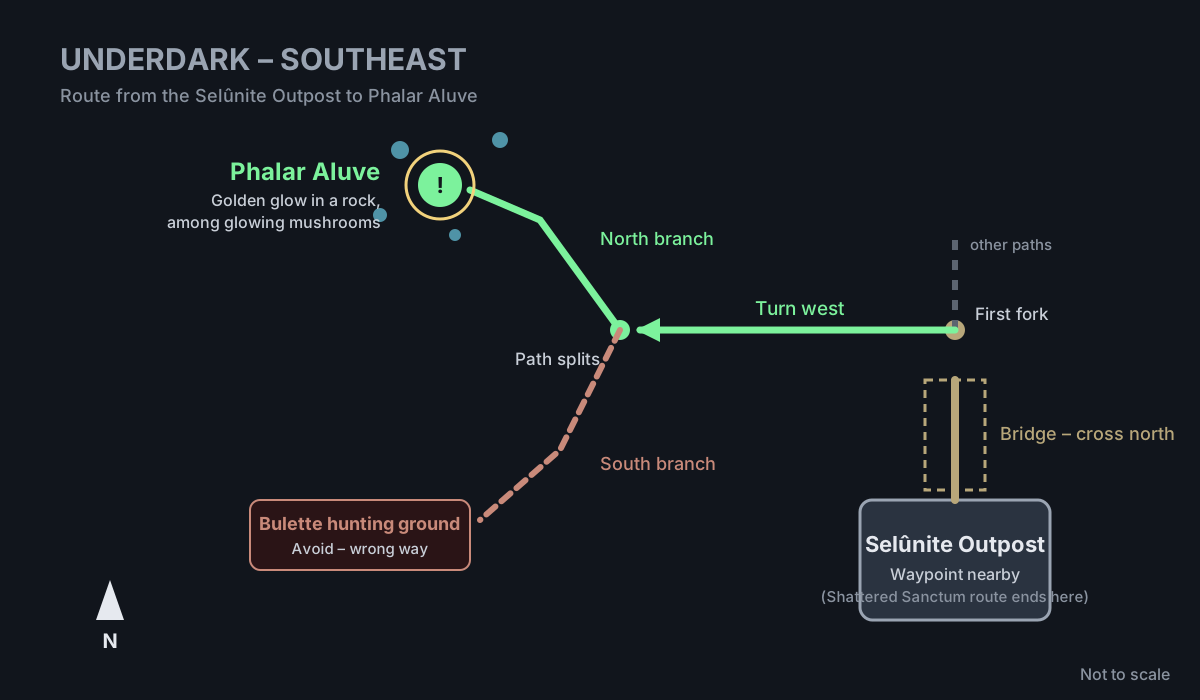
From the outpost, the sword sits a little to the west and north. Look for a rock with a golden glow coming from it, surrounded by glowing mushrooms. You can't miss it once you're close.
How to get there, step by step
- Reach the Underdark. Any entrance works, but the Shattered Sanctum route drops you right next to the Selûnite Outpost.
- Deal with the outpost. If you're arriving from outside, a Minotaur may be heading for the gate. The outpost's defenses can take care of it if you lure it close.
- Leave the outpost area and cross the bridge to the north.
- Turn west at the first fork.
- Take the northern branch when the path splits again. The southern branch leads to a Bulette's hunting ground – avoid it unless you want a fight.
- Look for the golden glow in a rock among the glowing mushrooms. That's Phalar Aluve.
How to pull the sword from the stone
When you interact with the sword, you'll get a few options. The two that matter:
| Method | Check | Result |
|---|---|---|
| Pull it out | Strength, DC 15 | Sword is freed if you pass |
| Study the ritual | Religion, DC 15 | Reveals the rite; shedding a little blood frees the sword |
- Bring a strong character. Karlach and Lae'zel are the best choices for the Strength check. Cast Guidance on them first for an extra 1d4 on the roll.
- Or go the Religion route. Shadowheart, who has the Acolyte background, is a natural pick, and any character proficient in Religion will do. Pass the check, then choose the option to spill a few drops of your blood on the stone. It costs a hit point and the sword comes free with no further roll.
- Equip it. Phalar Aluve is a main-hand weapon, and its Melody effect only works while it stays equipped.
The Religion route has a bonus: party members with the Acolyte background earn the "Last Rites of the Dark Dancer" Inspiration. You don't get that if you simply yank the sword out with Strength.
Failed both checks? You can still get it. Spilling blood on the stone beneath the sword outside of the dialogue makes it light up, and then it can be pulled out without a check. The bg3.wiki lists a few ways to do this, such as having one party member attack another next to the stone or inflicting Bleeding.
What Sing and Shriek actually do
Phalar Aluve: Melody costs an Action, lasts five turns and recharges on a Short Rest. You pick one of two modes:
- Sing – allies within 6 m (20 ft) of the wielder get a 1d4 bonus to attack rolls and saving throws. The wielder doesn't get the bonus.
- Shriek – enemies within 6 m get a 1d4 penalty, and every time they take damage they suffer an extra 1d4 Thunder damage.
Neither mode needs Concentration, so it works on top of spells like Bless and Bane. Shriek is especially strong with multi-hit attacks and spells such as Magic Missile, since the bonus Thunder damage triggers on each hit.
Tips
- Give it to a Dex character. Finesse lets the sword use your Dexterity modifier, making it a great early pick for a Dexterity fighter, a melee bard or a rogue who wants a bigger damage die.
- Fight in a tight group. Both melody modes only reach 6 m, so keep allies or enemies bunched around the wielder when you trigger it.
- Open fights with Shriek. Using it at the start of a big fight sets up the whole party for extra damage on every hit.
- Don't sleep on the weapon actions. Lacerate (Bleeding), Pommel Strike (can Daze) and Rush Attack are all available to anyone proficient with longswords.
Common mistakes
- Walking into the Bulette's area. The southern branch west of the outpost is the Bulette's hunting ground. If you head south at that second split, turn back.
- Rolling with a weak character. The Strength check is DC 15. Don't leave it to a low-Strength companion like Gale – swap in Karlach or Lae'zel, and use Guidance.
- Giving up after a failed roll. A failed check doesn't lock the sword. Try the Religion route or the blood trick instead.
- Unequipping during the melody. Swapping the sword out ends Sing or Shriek right away.
- Assuming the tooltip is the whole story. The in-game description only mentions Charisma, Wisdom and Intelligence saves, but the bg3.wiki reports that Sing's bonus applies to all saving throws and Shriek's penalty also hits attack rolls.
Sources
This article was written by AI (Claude) and checked against the sources above. Games are updated regularly, so details may change.